In a women's clothing store--one perplexed woman to the salesperson:
"I know that cows stand in the rain, I just don't buy the concept of washable suede."
Monday, December 04, 2006


Wednesday, November 29, 2006
sweat in the city
After a couple of years doing the marionette thing, happily bending words behind the curtain, I’ve again been seduced by the allure of the byline. Along with Community News features, beginning in January, I’ll be writing a column for the regional magazine, The Northwest Women’s Journal.
The premise for the column concerns my quest for balance. Mitigating the hours and hours I spend kneading language into conceit. So, in desperation and because a business opportunity presented itself, I began Pilates classes, hating every minute for a solid month. Who knew I was that crooked, that weak, that flabby?
Because I have to grope every experience I have into philosophical bullet points, I naturally began to write about my frustration at being so completely out of touch with my body. A month into the classes, though, something shifted. A body memory thing that had nothing to do with my noggin. I have begun to understand that illusive aphorism about “listening to your body.” Even though I’ve been writing a yoga studio’s newsletter for a year, that crap always sounded like New Age gobbledy-gook. I never absorbed it, scoffing instead: Bodies don’t talk! That’s a fallacy!
Surprise! Yes, Virginia, your body does talk! It’s just that my brain has been bossing my body around so long, I was unable to hear it. So now I listen, and I hear these lovely quotidian whispers which translate into tiny actions: Instinctively sitting up straighter when my shoulders start to burn from too much writing. Being aware of slouching, standing crooked and leaning on my hip to indulge my slight scoliosis.
So I’m going to be writing a column, and the column will most likely be called Sweat in the City. It’ll have that Keep Portland Weird regional flavor, of course. Each month I’ll investigate movement opportunities, Pacific Northwest versions of exercise—stuff we all have in access to in this fecund, young, and somewhat outré metropolitan region.
Look for the column starting in January. Better yet, pick up a copy when the December issue of The Northwest Women's Journal hits the stands. It’s available free at most public libraries and various outlets around town.
The premise for the column concerns my quest for balance. Mitigating the hours and hours I spend kneading language into conceit. So, in desperation and because a business opportunity presented itself, I began Pilates classes, hating every minute for a solid month. Who knew I was that crooked, that weak, that flabby?
Because I have to grope every experience I have into philosophical bullet points, I naturally began to write about my frustration at being so completely out of touch with my body. A month into the classes, though, something shifted. A body memory thing that had nothing to do with my noggin. I have begun to understand that illusive aphorism about “listening to your body.” Even though I’ve been writing a yoga studio’s newsletter for a year, that crap always sounded like New Age gobbledy-gook. I never absorbed it, scoffing instead: Bodies don’t talk! That’s a fallacy!
Surprise! Yes, Virginia, your body does talk! It’s just that my brain has been bossing my body around so long, I was unable to hear it. So now I listen, and I hear these lovely quotidian whispers which translate into tiny actions: Instinctively sitting up straighter when my shoulders start to burn from too much writing. Being aware of slouching, standing crooked and leaning on my hip to indulge my slight scoliosis.
So I’m going to be writing a column, and the column will most likely be called Sweat in the City. It’ll have that Keep Portland Weird regional flavor, of course. Each month I’ll investigate movement opportunities, Pacific Northwest versions of exercise—stuff we all have in access to in this fecund, young, and somewhat outré metropolitan region.
Look for the column starting in January. Better yet, pick up a copy when the December issue of The Northwest Women's Journal hits the stands. It’s available free at most public libraries and various outlets around town.
Monday, November 27, 2006
money money money money
There is the faintest dusting of snow this morning. A skin of white on the roof of my garage. Branches are bare. Gray is the pervading color all around. The smarter of the squirrels have foraged and now sit fatly wherever it is squirrels hole up in these parts. The dumber of the squirrels check their bank accounts hourly online, hoping that their supply of acorns will last through the week.
And so it goes.
I’m a dumb squirrel this winter. Juggling various accounts, hoping to avoid major credit card debt. My income comes from a pastiche of sources. The only dependable part just barely covers my myriad mortgages. Everything else trickles in here and there like faucets turned to drip during a cold snap. An editing job here, a writing job there. Occasional project management. The journalism I do pays roughly seven cents a word. Translated to an hourly wage parking meters make more money than I do.
Strangely though, (and I’ve heard this from many starving yet tenacious artist types) just when I’m down to husks, a check or an opportunity arrives. A fat editing job or a grant. Hardly a windfall, but miraculous, none-the-less.
And at 3 a.m. money woes seem to loop ever more prominently. You wake up for no apparent reason, and before you can sink back into your dreams, the black tape of hell binds you, jerking you into cul de sacs of doom: the what-if machine with lead boots and empty pockets. You slip down the hierarchy into Maslow’s inferno. No longer reaching for that crag wherein lies self-actualization, no, it’s down to the basics. Food, shelter and so on.
Luckily the doom loop sleeps during daylight hours. (Like a vampire.) Financial strategies present themselves. Belt-tightening that looked tortuous in the middle of the night morph into obvious solutions.
As a writer, I’ll never be wealthy. And as a dumb squirrel, I’ll tend toward modest piles of acorns. But most important is the gift to see money for what it really is: abstraction once removed from a thing in and of itself. I know how to find it if I have to. I know how to work. I like the view from the high branch though. Especially now that the flurries have picked up.
And so it goes.
I’m a dumb squirrel this winter. Juggling various accounts, hoping to avoid major credit card debt. My income comes from a pastiche of sources. The only dependable part just barely covers my myriad mortgages. Everything else trickles in here and there like faucets turned to drip during a cold snap. An editing job here, a writing job there. Occasional project management. The journalism I do pays roughly seven cents a word. Translated to an hourly wage parking meters make more money than I do.
Strangely though, (and I’ve heard this from many starving yet tenacious artist types) just when I’m down to husks, a check or an opportunity arrives. A fat editing job or a grant. Hardly a windfall, but miraculous, none-the-less.
And at 3 a.m. money woes seem to loop ever more prominently. You wake up for no apparent reason, and before you can sink back into your dreams, the black tape of hell binds you, jerking you into cul de sacs of doom: the what-if machine with lead boots and empty pockets. You slip down the hierarchy into Maslow’s inferno. No longer reaching for that crag wherein lies self-actualization, no, it’s down to the basics. Food, shelter and so on.
Luckily the doom loop sleeps during daylight hours. (Like a vampire.) Financial strategies present themselves. Belt-tightening that looked tortuous in the middle of the night morph into obvious solutions.
As a writer, I’ll never be wealthy. And as a dumb squirrel, I’ll tend toward modest piles of acorns. But most important is the gift to see money for what it really is: abstraction once removed from a thing in and of itself. I know how to find it if I have to. I know how to work. I like the view from the high branch though. Especially now that the flurries have picked up.
Friday, November 24, 2006
thanksgiving in whoville
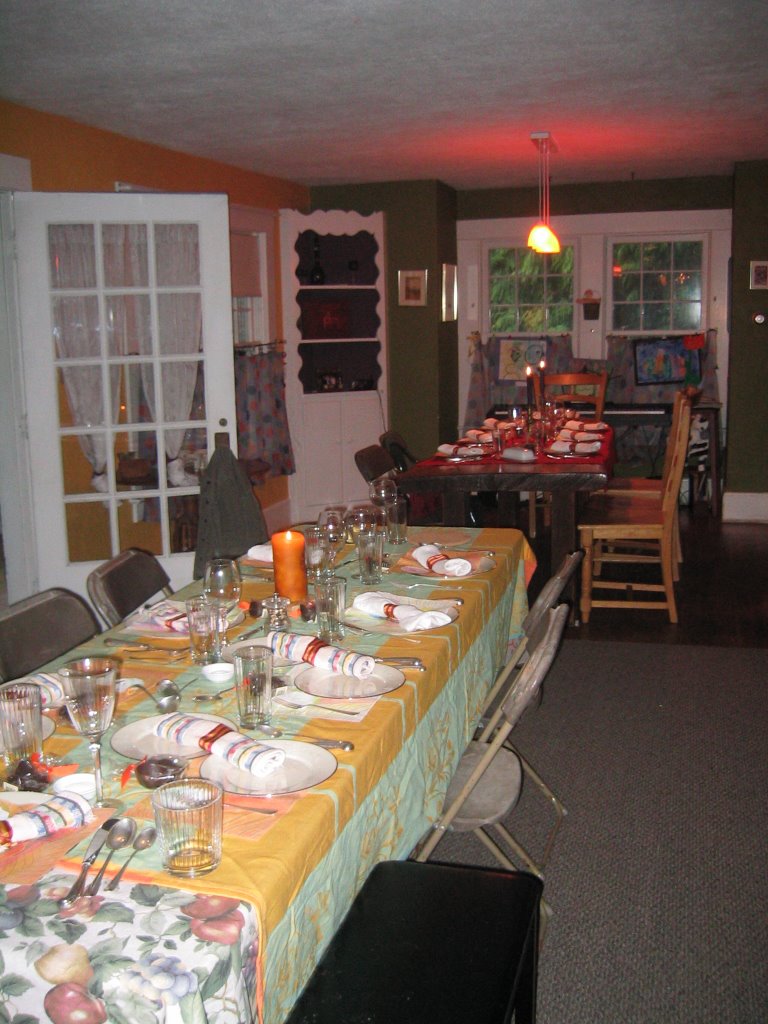
One of my favorite holiday programs is the Grinch. I know I’m not alone in this. Seuss’s redemption of that miserly, lonely, avarice-ridden hill-dweller is everything you need from a parable. Holidays offer a glimpse at the measure of a heart. They can act as electron microscopes and cosmic telescopes, both.
As in musical composition, capacity for crescendo is informed by emotional and artistic preparation. And by artistic preparation, I guess I’m edging into the territory of one’s particular talent for reality.
The better one’s talent for reality, the better able one is to mitigate the mundane with nuance, joie de vivre, what-have-you. And the more able one is to put oneself into the provincial task of daily living, the less likely that person will be to dive off the board during a party, or leave one feeling bereft.
I’m not a naturally social person. I have more than one quality in common with the mean old Grinch on the mountain. It’s not that I begrudge, it’s more like I expect disaster. I anticipate failure. This often leads me to a brand of inertia that looks like misanthropy. I have often worried that I might pass this tentativeness onto my children.
That’s why I invited a bunch of people over for Thanksgiving dinner. With Sam and Maggie now living elsewhere, the stakes are higher. I can either claim them during these sorts of occasions, or risk losing them to households with better socially functioning people.
Now past the initial post-divorced months, I’ve been experiencing a heightened sense of reality. I am finding myself, as they say. Rediscovering a capacity for fun, for imperfection, for texture.
I’m a sap, by the way. I save weird stuff: pregnancy sticks that culminated in the birth of my kids, reconnaissance maps from childhood spy games, my college ID. I have my two degree-announcing graduation tassels obscuring a small snapshot of my first wedding—a Catholic affair complete with a crucified Christ as backdrop—sitting just above my line of vision as I type this. My environment is replete with stock. That I love, have loved, will continue to love is three-dimensionally manifest.
So, the sentimental mommy puts it all out there for a big, old-fashioned secular bash, jams the house full of people. Beloved people. And the energy is rich, textural, human. My children are engaged, all three of them, in being with people, eating hearty fair, being grateful, in their way.
What I’m getting at is this. I now have overwhelming evidence to suggest that my children are healthy, reasonably happy, and not given to addiction born of deprivation. They are comfortable in their skins. Thanksgiving helped me see this, and for that, I am deeply grateful.
But more to the point, I am comfortably moving into my life as a single woman, a mother, a writer, a hostess—whatever. So, bring on the holidays. Get me some mistletoe.
Monday, November 20, 2006
eavesdrop of the day
Overheard at Pioneer Square. Dreadlocked young man with several buddies:
“I have a policy not to date anyone with the same name as my sister.”
Laughter from compatriots
“And it sucks, because, like, I have a lot of sisters.”
“I have a policy not to date anyone with the same name as my sister.”
Laughter from compatriots
“And it sucks, because, like, I have a lot of sisters.”
Sunday, November 19, 2006
epistemological roulette
Seems that everything I’m reading these days, and all the films I’m viewing, have chaos as their subtext. Of course, if you’ve been following the posts on this blog, you’ll note that chaos has been a recurring theme for yours truly as well.
On Friday I eagerly ventured downtown for the first showing of “Little Children,” the Todd Fields movie based on the novel of the same title by Tom Perrotta. Much of what resonated for me in this film had to do with the notion of desire and boundaries. Not just sexually, either.
When I think about moving forward, whether in romantic conquests or professional ones, there is always this foggy middle ground where projection, myth, presumption and fear reside. So many of our obstacles are visible only to us. We tell ourselves stories to keep from falling off the ledge.
Last weekend I found myself at an impromptu party: small space, lots of warm bodies, free-flowing wine. Set up for moral depravity, if ever there was one. The collective of folks in attendance were all, seemingly, at huge crossroads, considering personal epistemologies. Out of nowhere a snippet of George Eliot found its way into my hands. A Xeroxed copy of a passage from The Mill on the Floss. Something about “the great problem of the shifting relation between passion and duty.” Going after what you want, versus remaining duty-bound to that which you have pledged.
At the party, truth looked like, “Who I am is someone who lives life on her own terms, in defiance of maxims and in defiance of the common script.” But by Sunday (always the Sabbath we review and regret) small tendrils formed and reinstalled the framework. The cast of characters returned: projection courting fear building to resignation. Life on one’s own terms is fine, long as the kids have their cereal, and the leaves are raked into piles, and all the recycling is out at the curb by garbage day.
On Friday I eagerly ventured downtown for the first showing of “Little Children,” the Todd Fields movie based on the novel of the same title by Tom Perrotta. Much of what resonated for me in this film had to do with the notion of desire and boundaries. Not just sexually, either.
When I think about moving forward, whether in romantic conquests or professional ones, there is always this foggy middle ground where projection, myth, presumption and fear reside. So many of our obstacles are visible only to us. We tell ourselves stories to keep from falling off the ledge.
Last weekend I found myself at an impromptu party: small space, lots of warm bodies, free-flowing wine. Set up for moral depravity, if ever there was one. The collective of folks in attendance were all, seemingly, at huge crossroads, considering personal epistemologies. Out of nowhere a snippet of George Eliot found its way into my hands. A Xeroxed copy of a passage from The Mill on the Floss. Something about “the great problem of the shifting relation between passion and duty.” Going after what you want, versus remaining duty-bound to that which you have pledged.
At the party, truth looked like, “Who I am is someone who lives life on her own terms, in defiance of maxims and in defiance of the common script.” But by Sunday (always the Sabbath we review and regret) small tendrils formed and reinstalled the framework. The cast of characters returned: projection courting fear building to resignation. Life on one’s own terms is fine, long as the kids have their cereal, and the leaves are raked into piles, and all the recycling is out at the curb by garbage day.
Friday, November 17, 2006
when worlds collide
Here’s a stunning example of genre-bending, and the surrounding conversation. This
Sunday, November 12, 2006
the numbers
Number of cities I’ve lived in 10
Number of dwellings I’ve lived in 24
Jobs I’ve had where I’ve received a regular payroll check 9
Pounds of manuscripts in my basement right now 28
Novels I’ve written at least two drafts of 3
Novels I’ve published 0
Short stories I’ve written 38
Short stories I’ve published 11
Degrees I have 2
Money I’ve made in my whole life from writing (in $) 91,528
Money I’ve made in my whole life from non-writing (in $) 58,263
Money I’ve spent on my education and writing-related endeavors (in $) 101,600
Number of dwellings I’ve lived in 24
Jobs I’ve had where I’ve received a regular payroll check 9
Pounds of manuscripts in my basement right now 28
Novels I’ve written at least two drafts of 3
Novels I’ve published 0
Short stories I’ve written 38
Short stories I’ve published 11
Degrees I have 2
Money I’ve made in my whole life from writing (in $) 91,528
Money I’ve made in my whole life from non-writing (in $) 58,263
Money I’ve spent on my education and writing-related endeavors (in $) 101,600
Wednesday, November 08, 2006
the d word and the e word
To continue in the solipsistic vein I seem to have established, I need to visit a quality that’s always eluded me. Ever since I was a pixie-haired youngster, I’ve dodged discipline in favor of the sly sprint.
With writing, I’ve often abandoned the page for weeks, only to hole up, spending a weekend in obsessive wordsmithing. Which would be fine, I think, if it weren’t accompanied by grandiose plans—calendarized promises: if I keep up this pace, I’ll have a manuscript by Christmas!
A month ago I popped one of my daughter’s abandoned Ritalins, thinking maybe the chemical imperative therein would keep me on task. The resulting effect was several hours of meth-like monkey mind, plunging with great resolve into the mundanist of chores. It was counter to creativity, but I did, finally, vacuum out the minivan!
My ex-husband (and yes, I know he’s reading this) perpetually accuses me of fickleness and erratic mood swings. Like anyone confronted with labels that tend to invite dismissiveness (e.g. since I’m erratic he’s not accountable for his behavior because no matter what he does my response will be dictated by biochemistry) I balk. True, he often got the worst of me (much like a parent gets to absorb their child’s tantrums while the teacher sees only an earnest, well-behaved kid), but I’ve come to conclude that my lack of resolve has merely become more transparent due to that good old Second Law of Thermodynamics. That’s the one about dissipated potential--you know, entropy.
Pardon my lapse into empiricism—it’s a symptom of my affliction—but entropy accurately describes the tendency of matter to achieve chaos. In other words, it gets harder and harder to pull off the successful sprint when 90% of the time I’m going with the flow in my bumbling, make-it-up-as-I-go-along way.
This morning, for instance, as I poured a packet of instant oatmeal into my son’s bowl, I wondered about all the people I know who would read the directions on the packet and employ a measuring cup for the exact amount of boiling water to add to the mix. I could only really confirm one person (the sister-in-law of my first marriage, a military wife), but it got me thinking about the fact that last month I billed 20 hours to a company who hired me to project manage the inclusion of how-to-make-instant-stuffing videos on their website.
Not only do I not measure water into oatmeal, I’ve never measured coffee, soup ingredients, laundry detergent or oil when I’ve had the occasion to dump some into my engine. Me, who holds a Bachelor’s in Food Science, prefers to wing it with muffins, pancakes, enchiladas and the Thanksgiving turkey. I suppose that’s why I’m only sometimes a good cook. Like when Mercury isn’t in retrograde or during some other metaphysically favorable condition.
So now, at age 45, I’m inviting intention into my life. No, not inviting. That would be the old Suzy Vitello. I’m painfully choosing (not always, but often) routines that fight entropy. I, the most phlegmatic chick on the planet, have engaged in twice-weekly Pilates sessions for two solid months. And they’re hard! And now, I actually look, well not forward to them, but toward them; my body has developed Pavlovian expectations that must be fulfilled. That, and I’m eating salads every day and miniscule portions of a variety of saltless foods. I’ve lost ten pounds, and that’s good; high blood pressure runs in my family (more evidence of the second Law).
And what about writing? What about writing and not answering email and not doing billable hours writing, and not allowing my mind to wander into the stinky cage of the monkey mind? I know the answer to that, and it’s even harder than Pilates.
With writing, I’ve often abandoned the page for weeks, only to hole up, spending a weekend in obsessive wordsmithing. Which would be fine, I think, if it weren’t accompanied by grandiose plans—calendarized promises: if I keep up this pace, I’ll have a manuscript by Christmas!
A month ago I popped one of my daughter’s abandoned Ritalins, thinking maybe the chemical imperative therein would keep me on task. The resulting effect was several hours of meth-like monkey mind, plunging with great resolve into the mundanist of chores. It was counter to creativity, but I did, finally, vacuum out the minivan!
My ex-husband (and yes, I know he’s reading this) perpetually accuses me of fickleness and erratic mood swings. Like anyone confronted with labels that tend to invite dismissiveness (e.g. since I’m erratic he’s not accountable for his behavior because no matter what he does my response will be dictated by biochemistry) I balk. True, he often got the worst of me (much like a parent gets to absorb their child’s tantrums while the teacher sees only an earnest, well-behaved kid), but I’ve come to conclude that my lack of resolve has merely become more transparent due to that good old Second Law of Thermodynamics. That’s the one about dissipated potential--you know, entropy.
Pardon my lapse into empiricism—it’s a symptom of my affliction—but entropy accurately describes the tendency of matter to achieve chaos. In other words, it gets harder and harder to pull off the successful sprint when 90% of the time I’m going with the flow in my bumbling, make-it-up-as-I-go-along way.
This morning, for instance, as I poured a packet of instant oatmeal into my son’s bowl, I wondered about all the people I know who would read the directions on the packet and employ a measuring cup for the exact amount of boiling water to add to the mix. I could only really confirm one person (the sister-in-law of my first marriage, a military wife), but it got me thinking about the fact that last month I billed 20 hours to a company who hired me to project manage the inclusion of how-to-make-instant-stuffing videos on their website.
Not only do I not measure water into oatmeal, I’ve never measured coffee, soup ingredients, laundry detergent or oil when I’ve had the occasion to dump some into my engine. Me, who holds a Bachelor’s in Food Science, prefers to wing it with muffins, pancakes, enchiladas and the Thanksgiving turkey. I suppose that’s why I’m only sometimes a good cook. Like when Mercury isn’t in retrograde or during some other metaphysically favorable condition.
So now, at age 45, I’m inviting intention into my life. No, not inviting. That would be the old Suzy Vitello. I’m painfully choosing (not always, but often) routines that fight entropy. I, the most phlegmatic chick on the planet, have engaged in twice-weekly Pilates sessions for two solid months. And they’re hard! And now, I actually look, well not forward to them, but toward them; my body has developed Pavlovian expectations that must be fulfilled. That, and I’m eating salads every day and miniscule portions of a variety of saltless foods. I’ve lost ten pounds, and that’s good; high blood pressure runs in my family (more evidence of the second Law).
And what about writing? What about writing and not answering email and not doing billable hours writing, and not allowing my mind to wander into the stinky cage of the monkey mind? I know the answer to that, and it’s even harder than Pilates.
Saturday, November 04, 2006
the uncrackable code
The first thing I remember writing, ever, was a prosaic poem in the third grade. It was a sing-song one-off tribute to spring, something I popped out like an after-supper burp. Actually, I don’t remember the actual writing of it. What I do remember was the critique and the attention. The critique came from my mother, who was in the midst of acquiring a low-residency Goddard degree, and therefore attuned to the vagaries of art.
She was accurately disappointed with my poem, pointing out the dangers of cliché and received text. Only where I attempted a little onomatopoeia [tip-tap of raindrops] did my mother issue a nod. “Explore this direction a bit more,” I think is what she told me.
Conversely, my teacher Mrs. Engle (or was it Angle?) read my banal verse in front of the class, showered me with praise, and crowned me poetess of the year. Go figure.
Thus began my acknowledgement of the range of subjective consideration of the written word. And still, three decades later, I’m wrestling with notions of “good” and “popular” when it comes to production.
I hesitate to write the next thing here, which might come off sounding a tad sour-grapey. If I express it in its raw form it would come out something like: “Yeah, I can write crap people will eat up, I just choose not to.” Considering this a bit more thoroughly, I realize it’s not true. I have come to a point in my life where I simply can’t tap into the expectations of the normative world. I am at a loss to understand, for instance, the popularity of inane television shows like “Grey’s Anatomy.” The wholesale white-washing of emotional complexity, reduced to tired, predictable tropes. That’s what America craves, apparently.
Perhaps that’s why I’ve delved back into writing community news. I need to consider audience more than I have been. I must face my arrogant notions of art every time I tap my keyboard. And, acknowledge that if I was as deft at my craft as I need to be, I would have an audience, but, alas, I do not. It’s sobering. Very sobering.
She was accurately disappointed with my poem, pointing out the dangers of cliché and received text. Only where I attempted a little onomatopoeia [tip-tap of raindrops] did my mother issue a nod. “Explore this direction a bit more,” I think is what she told me.
Conversely, my teacher Mrs. Engle (or was it Angle?) read my banal verse in front of the class, showered me with praise, and crowned me poetess of the year. Go figure.
Thus began my acknowledgement of the range of subjective consideration of the written word. And still, three decades later, I’m wrestling with notions of “good” and “popular” when it comes to production.
I hesitate to write the next thing here, which might come off sounding a tad sour-grapey. If I express it in its raw form it would come out something like: “Yeah, I can write crap people will eat up, I just choose not to.” Considering this a bit more thoroughly, I realize it’s not true. I have come to a point in my life where I simply can’t tap into the expectations of the normative world. I am at a loss to understand, for instance, the popularity of inane television shows like “Grey’s Anatomy.” The wholesale white-washing of emotional complexity, reduced to tired, predictable tropes. That’s what America craves, apparently.
Perhaps that’s why I’ve delved back into writing community news. I need to consider audience more than I have been. I must face my arrogant notions of art every time I tap my keyboard. And, acknowledge that if I was as deft at my craft as I need to be, I would have an audience, but, alas, I do not. It’s sobering. Very sobering.
Wednesday, October 25, 2006
the nature of yearning
I’m in this in-between place right now. The “interstices” it’s been called. The space between one thing and the next thing, and everything that comes with it.
This is true of almost every aspect of my life. My marriage ended this year. Two of my three children flew the coop—tip-toeing into the land of grown-ups. My work as a freelancer is solidifying into a steady gig where I have become the ancillary communications tool for several companies and individuals.
And then there’s my creative pursuits. I’m in between serviceable draft and final product with Unkiss Me, and about to launch more deeply into the next big project—the stuttering insert-break-ridden document I’ve been calling Under Ground.
So I’m in this gap between thing one and thing two, and I am hyper-aware that the pretty, pretty sparkly stuff that shines while I’m here, and the choices I make in response to those shiny baubles, will be the ingredients that determine the next direction I take. The reason this is daunting is that I have some experience with interstices, and from them, historically, I’ve leapt into all sorts of fascinating, yet ultimately self-destructive adventures.
Oh what fun to be twenty-five and impetuous and impulsive! But wander over the border into 40-and-beyond and mad-cap, what-the-fuck whims play out like boils. They get harder and harder to hide, and take chunks, big fat shark-bite chunks from your self-esteem. Or not even your self-esteem. Self-esteem is what youngsters have. Middle aged people have dignity. And life conspires to make dignity look like Swiss cheese as you age.
Or maybe that’s my ossifying personality talking. Dunno. But I do know this. What doesn’t diminish as we age is yearning. What we have always wanted may wear different clothes. It may whisper instead of scream, but it propels us, continually. We crane our necks for it, we hold our breaths for it, we get better at pretending it all doesn’t matter in the end, but it does matter. And if we aren’t willing to shed a little dignity in service to yearning, I suppose we don’t deserve whatever it is we require.
So where does that leave me, here in the gap? How do I measure the distance between self-destruction and bravery? Measure twice, cut once? I’ll try that.
This is true of almost every aspect of my life. My marriage ended this year. Two of my three children flew the coop—tip-toeing into the land of grown-ups. My work as a freelancer is solidifying into a steady gig where I have become the ancillary communications tool for several companies and individuals.
And then there’s my creative pursuits. I’m in between serviceable draft and final product with Unkiss Me, and about to launch more deeply into the next big project—the stuttering insert-break-ridden document I’ve been calling Under Ground.
So I’m in this gap between thing one and thing two, and I am hyper-aware that the pretty, pretty sparkly stuff that shines while I’m here, and the choices I make in response to those shiny baubles, will be the ingredients that determine the next direction I take. The reason this is daunting is that I have some experience with interstices, and from them, historically, I’ve leapt into all sorts of fascinating, yet ultimately self-destructive adventures.
Oh what fun to be twenty-five and impetuous and impulsive! But wander over the border into 40-and-beyond and mad-cap, what-the-fuck whims play out like boils. They get harder and harder to hide, and take chunks, big fat shark-bite chunks from your self-esteem. Or not even your self-esteem. Self-esteem is what youngsters have. Middle aged people have dignity. And life conspires to make dignity look like Swiss cheese as you age.
Or maybe that’s my ossifying personality talking. Dunno. But I do know this. What doesn’t diminish as we age is yearning. What we have always wanted may wear different clothes. It may whisper instead of scream, but it propels us, continually. We crane our necks for it, we hold our breaths for it, we get better at pretending it all doesn’t matter in the end, but it does matter. And if we aren’t willing to shed a little dignity in service to yearning, I suppose we don’t deserve whatever it is we require.
So where does that leave me, here in the gap? How do I measure the distance between self-destruction and bravery? Measure twice, cut once? I’ll try that.
Saturday, October 21, 2006
motherhood and creative immersion
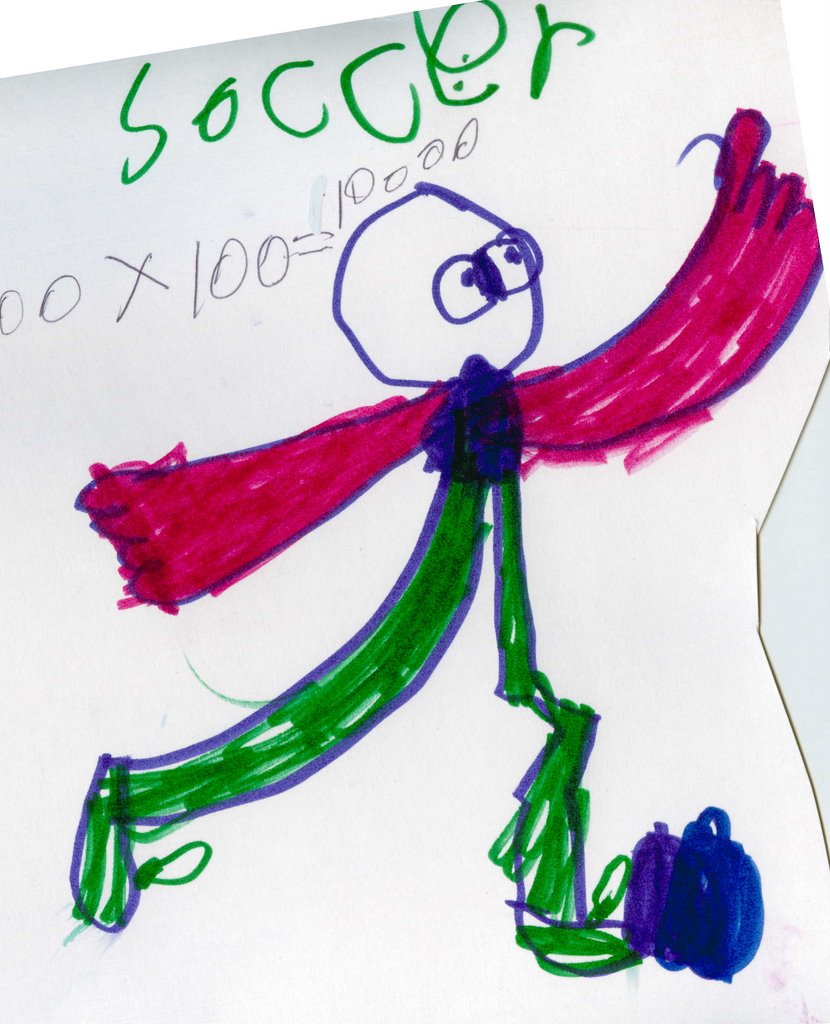
For 20 years (gulp) I’ve juggled the mommy-writer thing. Since my youngest child is seven, this will be going on for a while longer. Like right now, as I’m thinking about this essay, tapping it into my laptop, my son is crayoning beside me, scribbling his way through a music lesson, whereby he needs to identify notes and color spaces accordingly. The worksheet is an Ali Baba sort of thing. A happy boy atop a camel.
He asked me, just a minute ago, “Is there a such thing as a half person-half horse?”
Teachable moments abound, yes? “Well, there’s the Centaur,” I tell him. Then realize that we need a book of myths in this house. Why don’t we have a book of myths? And why don’t I remember the myth of the Centaur? Crap.
During this twenty-year odyssey, I've attended my share of soccer games and Disney movies and PTA meetings. But it’s not as though my creative immersion is necessarily interrupted by one after another prosaic barb; what competes with sinking into the ethereal world of story is often an equally compelling and creative invitation. The distraction of a child’s burgeoning fabulism is so enticing.
What can, for instance, abandoning my own work in favor of chasing the Centaur teach me? Where will it lead? Certainly, this invitation will inform the day’s events and, by extension, my own work.
Kids are the Zeitgeist of the universe fantastic. Realist that I am, had I not had children, my days would be devoid of these circuitous forays into wonder, and my work, I know, would have suffered. But I must go now, for there is a soccer game to attend.
Sunday, October 15, 2006
a perfect weekend in october
The last perfect weekend I had was when I trotted off to Neskowin in early August with some writer pals. I finished Unkiss Me, blessed the damn thing with sea water, had a few martinis, and got slapped on the back in congratulations by my colleagues.
I left that perfect weekend, my head pounding with story, my heart filled with whatever a heart gets filled with after a creative purge. I dunno. I felt terrific!
I’ve just had another of those weekends, only this time, I didn’t need to leave home. My ex-husband and son were out of town, and my other two kids---well, they have their own lives (and apartments), so it was just me and my machine and my pile of research books.
I’ve converted my daughter’s bedroom into a sort of make-shift writing space. I’ve plopped a few sacred objects in the room, some photos and some books that I love. A chair, and a cheap lamp and an oscillating Honeywell heater, because it just got chilly in Oregon. There is a wall of windows in this room, south-facing, but the light is obscured by one of the biggest trees in the neighborhood, a giant cedar that is planted a few feet from the house. This morning a cold front moved in and for a titillating fifteen minutes the tree bowed and yawed and pitched, its dead needles flung from their mother-perch with the drama of an enraptured baton twirler.
Instead of ending something, I truly began a story I’ve been picking at for over a year. I have written 85 pages of this thing in a very careless, spewing fashion. I had a vague idea that I would write this family drama with a mystery embedded and tell it from a bazillion points of view.
The document on my desk top is titled “new project” although after a year, that becomes false advertising. So, this weekend, I ventured into the realm of outlining the plot.
Working from an outline has always been the killer to the sacred cow instilled in me via the famous E.L. Doctorow quote: “Writing a novel is like driving at night. You can only see as far as the headlights.”
I have honored that paradigm through three novels (all of which rest in plastic containers in the storage spaces of my house). I’m going to try it a different approach this time. I decided, this weekend, to employ the genre-writer’s technique instead. I set out to sketch a blueprint for myself. A literary mapquest, if you will, fuck Doctorow. The headlights will save my ass, but I’m upgrading to GPS to see if I can reach my destination a little bit less road-weary. Hope I don’t hit a deer along the way!
I left that perfect weekend, my head pounding with story, my heart filled with whatever a heart gets filled with after a creative purge. I dunno. I felt terrific!
I’ve just had another of those weekends, only this time, I didn’t need to leave home. My ex-husband and son were out of town, and my other two kids---well, they have their own lives (and apartments), so it was just me and my machine and my pile of research books.
I’ve converted my daughter’s bedroom into a sort of make-shift writing space. I’ve plopped a few sacred objects in the room, some photos and some books that I love. A chair, and a cheap lamp and an oscillating Honeywell heater, because it just got chilly in Oregon. There is a wall of windows in this room, south-facing, but the light is obscured by one of the biggest trees in the neighborhood, a giant cedar that is planted a few feet from the house. This morning a cold front moved in and for a titillating fifteen minutes the tree bowed and yawed and pitched, its dead needles flung from their mother-perch with the drama of an enraptured baton twirler.
Instead of ending something, I truly began a story I’ve been picking at for over a year. I have written 85 pages of this thing in a very careless, spewing fashion. I had a vague idea that I would write this family drama with a mystery embedded and tell it from a bazillion points of view.
The document on my desk top is titled “new project” although after a year, that becomes false advertising. So, this weekend, I ventured into the realm of outlining the plot.
Working from an outline has always been the killer to the sacred cow instilled in me via the famous E.L. Doctorow quote: “Writing a novel is like driving at night. You can only see as far as the headlights.”
I have honored that paradigm through three novels (all of which rest in plastic containers in the storage spaces of my house). I’m going to try it a different approach this time. I decided, this weekend, to employ the genre-writer’s technique instead. I set out to sketch a blueprint for myself. A literary mapquest, if you will, fuck Doctorow. The headlights will save my ass, but I’m upgrading to GPS to see if I can reach my destination a little bit less road-weary. Hope I don’t hit a deer along the way!
Friday, October 13, 2006
on smith and smiley
Here’s a review of “On Beauty” from Amazon.com:
As actor William Hurt might say in his stolid and mannered, look-at-the wheels-turning-in-my-head voice: " I.............could not................finish.................this book. For a book about race and identity, family dynamics and adultery, and academic rivalry and competition it's surprisingly dull. Midway through the book, there is little or no character or plot development, and the overall feeling is that it was written to fulfill a publishing contract. There's some amusing banter from the younger son, a teen who lives in an academic community (a disguised Wellesley, Massachusetts?) but tries on an inner city "hood" identity, and several of the scenes are very well written.
There are scads of like-reviews on this novel, Smith’s third book. But there are some glowing ones as well. Here’s one, also on Amazon.com:
Smith has fashioned a superb book, her best to date. She has interwoven class, race, and gender and taken everyone prisoner. Her even-handed renditions of liberal and/or conservative mouthings are insightful, often hilarious, and damning to all. She has a great time exposing everyone's clay feet. This author is a young woman cynical beyond her years, and we are all richer for it.
I didn’t read White Teeth or the Autograph Man, so can’t speak to where this book falls in my own line of preference. But I have read Howard’s End and bits of Moo, two books referenced for comparison. Initially, Smith appears to have been propelled by the conceit “What would happen if you set Howard’s End in contemporary times?” She begins the book with an email, hallmark of 21st century communication between family members, but then never revisits the medium, and, indeed, never really revisits any attempt by the eldest son to gain an audience with his miserable, unselfaware dad.
The book dips into the close points of view of a massive cast of characters. Which is a challenging and admirable stance. (I can’t pull this sort of thing off in third person, not by a long shot—which is why I’m turning the camera on my characters one-at-a-time, giving them their own first person time on the stand.) Anyway, Smith is very nimble at moving the camera around her community without obvious authorial intrusion. She is fearless with dialect, extraordinary with language, and colorful with details. But she lets her characters amble around too long, allowing them far too much time engaged in meaningless small talk that occasionally commits the sin of furthering plot via dialogue. And, I must agree with her critics, the book is at times flat and boring.
Moo approaches the theme (an academic setting rife with lust, jealousy, back-stabbing and prejudice) differently from the outset. Instead of diving into the head of one of the characters during the throws of romantic crisis (as Smith does), Smiley introduces the setting with the grand authority of unapologetic omniscience. From this sweeping and glorious picture, Smiley zooms in on one of the characters, who is introduced in the context of place, which grounds the reader and establishes a line of flight with the narrative.
The other enormous difference between Moo and On Beauty is the element of satire woven deftly into the pages of Smiley’s book. The juxtaposition of academic one-upmanship and hog troughs brings fresh perspective and hilarity to the oft-storied theme of hierarchy within the hallowed halls of academe. On Beauty approaches hyperbole much more literally, and although deserving of the occasional chuckle, we don’t go far enough off the deep end to feel our own experiences within Smith’s tale.
As actor William Hurt might say in his stolid and mannered, look-at-the wheels-turning-in-my-head voice: " I.............could not................finish.................this book. For a book about race and identity, family dynamics and adultery, and academic rivalry and competition it's surprisingly dull. Midway through the book, there is little or no character or plot development, and the overall feeling is that it was written to fulfill a publishing contract. There's some amusing banter from the younger son, a teen who lives in an academic community (a disguised Wellesley, Massachusetts?) but tries on an inner city "hood" identity, and several of the scenes are very well written.
There are scads of like-reviews on this novel, Smith’s third book. But there are some glowing ones as well. Here’s one, also on Amazon.com:
Smith has fashioned a superb book, her best to date. She has interwoven class, race, and gender and taken everyone prisoner. Her even-handed renditions of liberal and/or conservative mouthings are insightful, often hilarious, and damning to all. She has a great time exposing everyone's clay feet. This author is a young woman cynical beyond her years, and we are all richer for it.
I didn’t read White Teeth or the Autograph Man, so can’t speak to where this book falls in my own line of preference. But I have read Howard’s End and bits of Moo, two books referenced for comparison. Initially, Smith appears to have been propelled by the conceit “What would happen if you set Howard’s End in contemporary times?” She begins the book with an email, hallmark of 21st century communication between family members, but then never revisits the medium, and, indeed, never really revisits any attempt by the eldest son to gain an audience with his miserable, unselfaware dad.
The book dips into the close points of view of a massive cast of characters. Which is a challenging and admirable stance. (I can’t pull this sort of thing off in third person, not by a long shot—which is why I’m turning the camera on my characters one-at-a-time, giving them their own first person time on the stand.) Anyway, Smith is very nimble at moving the camera around her community without obvious authorial intrusion. She is fearless with dialect, extraordinary with language, and colorful with details. But she lets her characters amble around too long, allowing them far too much time engaged in meaningless small talk that occasionally commits the sin of furthering plot via dialogue. And, I must agree with her critics, the book is at times flat and boring.
Moo approaches the theme (an academic setting rife with lust, jealousy, back-stabbing and prejudice) differently from the outset. Instead of diving into the head of one of the characters during the throws of romantic crisis (as Smith does), Smiley introduces the setting with the grand authority of unapologetic omniscience. From this sweeping and glorious picture, Smiley zooms in on one of the characters, who is introduced in the context of place, which grounds the reader and establishes a line of flight with the narrative.
The other enormous difference between Moo and On Beauty is the element of satire woven deftly into the pages of Smiley’s book. The juxtaposition of academic one-upmanship and hog troughs brings fresh perspective and hilarity to the oft-storied theme of hierarchy within the hallowed halls of academe. On Beauty approaches hyperbole much more literally, and although deserving of the occasional chuckle, we don’t go far enough off the deep end to feel our own experiences within Smith’s tale.
Tuesday, October 10, 2006
Zany Zadie and some Musings on Repurposing Frustration
Today I had what many writers think of as a “fallow” day. Monkey mind pulling me along the normative world, everything rational and ordered. Work was engaging, but very specific, and had nothing to do with my creative work…my raison d’ etre, my muse.
Or did it? Somewhere between the Online Professional Personal Trainer Tool client and the Crouton folks, I drifted into dream space, back to my novel. Frustration, actually, was the guide that wrote itself all over one of the characters in Underground. Frustration I felt at myself for not carving time with the page translated to frustration Farrell had with living someone else’s life.
Frustration squeezed from my body, poured into a template, and then repurposed for use with my character. Which, ironically, fairly well describes the process I use when moving from client to client writing marketing copy.
On another note, I’m reading Zadie Smith’s “On Beauty” for my book group, and attempting to dissect it for the way Smith handles her crowd of characters. I’ve found it a long climb so far, and I’ve only reached page 87. But. I think the story is about to improve (or at least move a bit more rapidly) so I will keep you posted!
(And, to all you Zadie fans---I’m trying to like her narrative style, really! I mean, if she’s good enough to garner spectacular reviews about the globe, the fault of my impatience must reside with me!)
Or did it? Somewhere between the Online Professional Personal Trainer Tool client and the Crouton folks, I drifted into dream space, back to my novel. Frustration, actually, was the guide that wrote itself all over one of the characters in Underground. Frustration I felt at myself for not carving time with the page translated to frustration Farrell had with living someone else’s life.
Frustration squeezed from my body, poured into a template, and then repurposed for use with my character. Which, ironically, fairly well describes the process I use when moving from client to client writing marketing copy.
On another note, I’m reading Zadie Smith’s “On Beauty” for my book group, and attempting to dissect it for the way Smith handles her crowd of characters. I’ve found it a long climb so far, and I’ve only reached page 87. But. I think the story is about to improve (or at least move a bit more rapidly) so I will keep you posted!
(And, to all you Zadie fans---I’m trying to like her narrative style, really! I mean, if she’s good enough to garner spectacular reviews about the globe, the fault of my impatience must reside with me!)
Tuesday, October 03, 2006
the circle
In 1995 I abandoned my family to spend five weeks in Eastern Europe. It was one of those salmon things---returning whence I was spawned, aligning with cabbage and pickled meats and opulent spires. My delusional nobility leading me back to my people. The Freisingers and the Rajunises and the Petlechs.
While in Prague, I got to read at a legendary salon, the Café Viola. I read a story with the working title “Facebow” which explored the lives of three girls on the cusp of adolescence. Two of the girls were sisters and the third was a neighbor who metronomically switched allegiance from one sister to the other. It was a romp through the nuances of female cruelty as I myself had experienced them in the shadow of Junior High. The story was in an early draft phase and I relied on the ironic, humorous aspects of awkwardness to move the tale along, slapping madcap anecdotes against each other: whap, wing, wallop.
Good thing I tickled the crowd’s funny bone, too, for in my nervous haste, dashing down Narodni Street, my pages flapping loosely in a manila folder, part of the story had, unbeknown to me, flown away. Think of all the going-to-class-in-your-underpants dreams you’ve had. The humiliating scenarios you might envision before an interview for a sought-after position. There you are, in the spotlight, the crowd somewhat attentive, and you realize, halfway down the final page that what you are reading is not, in fact, the final page.
Since then I’ve slogged through multiple drafts of “Facebow.” The story is now titled “The Circle” and I’ve recently plunged back into it, hoping to polish it up once more before finally sending it out for a home. I’ve kept this one with me a long, long time. Most of its siblings (I’ve corralled the lot of them into a collection called “Twenty-six Poses and Other Positions on Love”) have married off. Flown the coop and found purchase between the covers of some journal or another. But not “The Circle.”
I wonder if perhaps I’ve projected my Viola Café embarrassment onto it. As though The Circle were a ne’er do well boy who grew up to live in my basement. The same way an overprotective mother might guard her slacker son from potential disappointment by ignoring underachievement, perhaps the way I’ve dealt with my hubris-gone-awry is to pretend the story is better off in my file cabinet than out in the world.
As seems to be the case with quests, what I got out of my sojourn in 1995 was huge, but not at all what I set out to find. My ancestors were a dysfunctional, somewhat unlucky bunch steeped in scandal and misstep. And I am their legacy, a chaotic late-blooming dreamer swimming forever upstream.
Read "The Circle"
While in Prague, I got to read at a legendary salon, the Café Viola. I read a story with the working title “Facebow” which explored the lives of three girls on the cusp of adolescence. Two of the girls were sisters and the third was a neighbor who metronomically switched allegiance from one sister to the other. It was a romp through the nuances of female cruelty as I myself had experienced them in the shadow of Junior High. The story was in an early draft phase and I relied on the ironic, humorous aspects of awkwardness to move the tale along, slapping madcap anecdotes against each other: whap, wing, wallop.
Good thing I tickled the crowd’s funny bone, too, for in my nervous haste, dashing down Narodni Street, my pages flapping loosely in a manila folder, part of the story had, unbeknown to me, flown away. Think of all the going-to-class-in-your-underpants dreams you’ve had. The humiliating scenarios you might envision before an interview for a sought-after position. There you are, in the spotlight, the crowd somewhat attentive, and you realize, halfway down the final page that what you are reading is not, in fact, the final page.
Since then I’ve slogged through multiple drafts of “Facebow.” The story is now titled “The Circle” and I’ve recently plunged back into it, hoping to polish it up once more before finally sending it out for a home. I’ve kept this one with me a long, long time. Most of its siblings (I’ve corralled the lot of them into a collection called “Twenty-six Poses and Other Positions on Love”) have married off. Flown the coop and found purchase between the covers of some journal or another. But not “The Circle.”
I wonder if perhaps I’ve projected my Viola Café embarrassment onto it. As though The Circle were a ne’er do well boy who grew up to live in my basement. The same way an overprotective mother might guard her slacker son from potential disappointment by ignoring underachievement, perhaps the way I’ve dealt with my hubris-gone-awry is to pretend the story is better off in my file cabinet than out in the world.
As seems to be the case with quests, what I got out of my sojourn in 1995 was huge, but not at all what I set out to find. My ancestors were a dysfunctional, somewhat unlucky bunch steeped in scandal and misstep. And I am their legacy, a chaotic late-blooming dreamer swimming forever upstream.
Read "The Circle"
Thursday, September 14, 2006
who are these people in my story?
Well, I haven’t been all that successful with the pre-dawn writing commitment ala William Stafford. Guess I’ll never amount to Laureate status. Sigh. Kick. Sigh.
But. I have plunged back into Underground. The trouble with the way I was handling re-engagement previously was that I couldn’t pick up the emotional connection to the thread that I’d had before “cheating” on Underground with Unkiss Me. So I decided to revisit the beginning, and that’s when I reconnected.
Turns out I learned a bit more about my characters’ motivations since I’d initially slapped down the conceit. Also, I know more about what happens to the characters. Much more. It was refreshing to begin anew with all that information. My first chapter opens with a character named Farrell, who is the youngest of four sisters. The novel opens with italicized backstory. Farrell’s musings on her father’s heartbreak and her oldest sister’s part in the broken heart. The novel proper, however, begins with a phone call from one of Farrell’s sisters, announcing the death of their father, an end-stage alcoholic.
I remember the first time I brought this piece to workshop, around a year ago, the universal comments were about the lack of emotional reportage. It was hard to know how Farrell felt learning of her father’s death. Clearly, there is ambivalence, but there weren’t enough on-the-body close-ups to demonstrate the ambivalence in a visceral way.
There are five first-person points of view in this book. Five voices to consistify. In addition to voice, there are ways of being I have to begin to nail. Tics, objects, movement, cadence, all that sort of stuff. Inventing characters truly appeals to the schizophrenic in me! Perhaps instead of time or page count, I should make my goals a bit more abstract. Say, by next week I want to know what Sarah (the oldest sister) would choose at a salad bar. When was the last time she had her teeth cleaned? What movies does she like. You know what that means….they’re getting blog profiles!
But. I have plunged back into Underground. The trouble with the way I was handling re-engagement previously was that I couldn’t pick up the emotional connection to the thread that I’d had before “cheating” on Underground with Unkiss Me. So I decided to revisit the beginning, and that’s when I reconnected.
Turns out I learned a bit more about my characters’ motivations since I’d initially slapped down the conceit. Also, I know more about what happens to the characters. Much more. It was refreshing to begin anew with all that information. My first chapter opens with a character named Farrell, who is the youngest of four sisters. The novel opens with italicized backstory. Farrell’s musings on her father’s heartbreak and her oldest sister’s part in the broken heart. The novel proper, however, begins with a phone call from one of Farrell’s sisters, announcing the death of their father, an end-stage alcoholic.
I remember the first time I brought this piece to workshop, around a year ago, the universal comments were about the lack of emotional reportage. It was hard to know how Farrell felt learning of her father’s death. Clearly, there is ambivalence, but there weren’t enough on-the-body close-ups to demonstrate the ambivalence in a visceral way.
There are five first-person points of view in this book. Five voices to consistify. In addition to voice, there are ways of being I have to begin to nail. Tics, objects, movement, cadence, all that sort of stuff. Inventing characters truly appeals to the schizophrenic in me! Perhaps instead of time or page count, I should make my goals a bit more abstract. Say, by next week I want to know what Sarah (the oldest sister) would choose at a salad bar. When was the last time she had her teeth cleaned? What movies does she like. You know what that means….they’re getting blog profiles!
Thursday, August 31, 2006
the end of summer
September begins tomorrow, and as is often the case, I’m moved to recreate my schedule to make more focused time for writing. Having a full time job, parenting three kids and navigating the ever-so-turbulent affairs of the heart, I seem to be neglecting my writing.
I wish it weren’t so darn hard for me to wake up at 4 am, as many of my successful colleagues do, to spend a couple of unsullied hours at my craft. This is the habit instilled in “real writers,” after all. William Stafford, for instance. He was a pre-dawn writer. Every day of his life. And he greeted the day with exercise, too! I fail on both accounts.
I lack the ability to sustain focus, determination and conviction, attending instead to whatever stray thought wafts my way. The novel I’m wrestling with now demands more for me. It wants a writer who approaches from a more disciplined and organized position. What I find is that I consider the work at hand only after the normative issues in my life have reached a level of sedation. The novel is the red-haired stepchild. The thing embarked upon after sighing heavily and cracking knuckles repeatedly.
I can’t blame my prioritizing on motherhood, work or my romantic ennui. It’s something else. Insecurity, perhaps? Guilt? Or maybe just ordinary fear of being seized by impulses greater than myself, and projecting a lack of boundaries once immersed.
Flexibility, the false-friend to freelancers, nudges me toward complacency. Laziness, even. The flip side of flexibility is shallow conviction. Sanguine tra-la-la-la-la, and splashing about in ankle-deep puddles. I fear this is my profile. I am not deep enough to be a serious writer. I am not convicted enough.
Even now, with four days in which to do whatever the heck I want, I am choosing to pop myself into my minivan and zip over the mountains in order to ride my bike alongside my son and my ex-husband. I’ve chosen to attend to the frisky family girl in me, at the expense of a possible deep plunge into the novel. Take Ray Carver, for instance. He lived for uninterrupted writing opportunities. Take the thousand or so writers who will participate in this year’s Labor Day Weekend write-a-thon, the annual 3-Day Novel competition.
I’m going to pass on this exercise this year. But I will make one concession: I am going to wake up at 5:30 every single day next week, beginning on Monday, and spend at least one solid hour writing before doing anything else (except pouring ready-made coffee into a mug). Wish me luck.
I wish it weren’t so darn hard for me to wake up at 4 am, as many of my successful colleagues do, to spend a couple of unsullied hours at my craft. This is the habit instilled in “real writers,” after all. William Stafford, for instance. He was a pre-dawn writer. Every day of his life. And he greeted the day with exercise, too! I fail on both accounts.
I lack the ability to sustain focus, determination and conviction, attending instead to whatever stray thought wafts my way. The novel I’m wrestling with now demands more for me. It wants a writer who approaches from a more disciplined and organized position. What I find is that I consider the work at hand only after the normative issues in my life have reached a level of sedation. The novel is the red-haired stepchild. The thing embarked upon after sighing heavily and cracking knuckles repeatedly.
I can’t blame my prioritizing on motherhood, work or my romantic ennui. It’s something else. Insecurity, perhaps? Guilt? Or maybe just ordinary fear of being seized by impulses greater than myself, and projecting a lack of boundaries once immersed.
Flexibility, the false-friend to freelancers, nudges me toward complacency. Laziness, even. The flip side of flexibility is shallow conviction. Sanguine tra-la-la-la-la, and splashing about in ankle-deep puddles. I fear this is my profile. I am not deep enough to be a serious writer. I am not convicted enough.
Even now, with four days in which to do whatever the heck I want, I am choosing to pop myself into my minivan and zip over the mountains in order to ride my bike alongside my son and my ex-husband. I’ve chosen to attend to the frisky family girl in me, at the expense of a possible deep plunge into the novel. Take Ray Carver, for instance. He lived for uninterrupted writing opportunities. Take the thousand or so writers who will participate in this year’s Labor Day Weekend write-a-thon, the annual 3-Day Novel competition.
I’m going to pass on this exercise this year. But I will make one concession: I am going to wake up at 5:30 every single day next week, beginning on Monday, and spend at least one solid hour writing before doing anything else (except pouring ready-made coffee into a mug). Wish me luck.
Wednesday, August 16, 2006
betrayal
Stepping back from Unkiss Me, its meta-theme has become a bit more clear. It’s the story of betrayal, in its many guises. The sort of “Original Sin” betrayal, wherein the underbelly of paradise is exposed: temptation, material desires, seeking without embracing. That sort of thing.
Then there’s the theme of jealousy and infidelity: the boy-girl story examined through the lens of a long-term marriage. The betrayal of the confessor. The betrayal of the penitent. And the myriad betrayals by one’s environment, body, community and country.
Set in the template of the cyber fairytale, Unkiss Me pours “the same old story” into a modern vessel. The hermit crab appropriating a home in the form of the blog and other aspects of electronic communication. What do you think?
Then there’s the theme of jealousy and infidelity: the boy-girl story examined through the lens of a long-term marriage. The betrayal of the confessor. The betrayal of the penitent. And the myriad betrayals by one’s environment, body, community and country.
Set in the template of the cyber fairytale, Unkiss Me pours “the same old story” into a modern vessel. The hermit crab appropriating a home in the form of the blog and other aspects of electronic communication. What do you think?
Monday, August 07, 2006
fin
I am fresh from a weekend at the Oregon Coast where I sped off to on Friday to meet up with three other like-minded compatriots for the soul purpose of finishing Unkiss Me.
I am happy to report that the trip was a complete success, in that, not only did I finish the book, but got some excellent, last-minute feedback from my friends. One of my fellow writers, an ex-priest, zeroed in on a Catholic idiom faux pas (I, a former Catholic, confused the word “confessor” with “penitent”; I should have my Confirmation papers revoked!).
Of interest to me was a discussion we had on the nature of “blog voice.” That is to say, the cadence, structure and stance typically found on a blog, as opposed to, say, an essay or a piece of fiction. Exposition versus narration. Telling versus showing. Presenting the facts versus musing.
In appropriating the blog form in which to tell my story, I was concerned about falling into the “imitative fallacy” trap, in other words, expounding ad nauseum with a somewhat pedantic tone. Below is a great definition of imitative fallacy I found on a science fiction writers website, of all places.
Imitative fallacy. The common trap of trying to make the narrative imitate the personality of the protagonist. When the novel is concerned with an unlikable or inaccessible protagonist, the narrative is also unlikable and inaccessible. Since the reader cannot figure out the protagonist, nor is the reader given any reason to care about the protagonist, the reader disengages. The prose must transcend the imitative fallacy. Two examples of excellence are Sinclair Lewis, Elmer Gantry (hypocritical evangelist), and Babbitt (smug placid businessman). (CSFW: David Smith)
So, I’ve erred on the side of presenting the material using more traditional literary devices within the blog form. I incorporate dialog, I present scenes, and, hopefully, I get a bit lyric now and again. It’s all part of the genre-bending conceit.
So, back in the heat of the Willamette Valley for me, in front of my machine, and now I have to sell the mother%*&%*!
I am happy to report that the trip was a complete success, in that, not only did I finish the book, but got some excellent, last-minute feedback from my friends. One of my fellow writers, an ex-priest, zeroed in on a Catholic idiom faux pas (I, a former Catholic, confused the word “confessor” with “penitent”; I should have my Confirmation papers revoked!).
Of interest to me was a discussion we had on the nature of “blog voice.” That is to say, the cadence, structure and stance typically found on a blog, as opposed to, say, an essay or a piece of fiction. Exposition versus narration. Telling versus showing. Presenting the facts versus musing.
In appropriating the blog form in which to tell my story, I was concerned about falling into the “imitative fallacy” trap, in other words, expounding ad nauseum with a somewhat pedantic tone. Below is a great definition of imitative fallacy I found on a science fiction writers website, of all places.
Imitative fallacy. The common trap of trying to make the narrative imitate the personality of the protagonist. When the novel is concerned with an unlikable or inaccessible protagonist, the narrative is also unlikable and inaccessible. Since the reader cannot figure out the protagonist, nor is the reader given any reason to care about the protagonist, the reader disengages. The prose must transcend the imitative fallacy. Two examples of excellence are Sinclair Lewis, Elmer Gantry (hypocritical evangelist), and Babbitt (smug placid businessman). (CSFW: David Smith)
So, I’ve erred on the side of presenting the material using more traditional literary devices within the blog form. I incorporate dialog, I present scenes, and, hopefully, I get a bit lyric now and again. It’s all part of the genre-bending conceit.
So, back in the heat of the Willamette Valley for me, in front of my machine, and now I have to sell the mother%*&%*!
Subscribe to:
Posts (Atom)